Garding, landscaping and forestry in southern Portugal

Pruning of palm trees / combat of the Red Palm Weevil
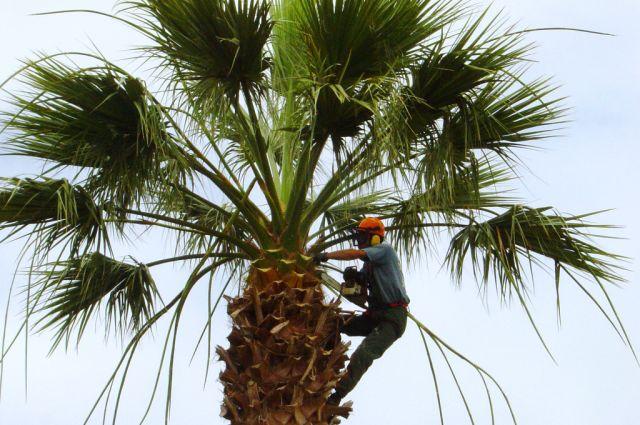 On the one side we carry out pruning of palm trees with the help of professional climbing equipment.
In recent years the Red Palm Weevil became a real problem in the Algarve. Especially old and valuable specimen of the Phoenix species are affected, but several other palm species can also fall a victim to this insect. The grubs eat the vegetative centre of the palm, so the tree dies within a view weeks. First symptoms are a lack of vitality and slackening of the inner fronds. In a later stage the leaves in the centre turn yellow and single fronds can fall out. The palm dies from within and assumes the characteristic shape of a stork’ s nest, where only the outer leaves remain on the shaft.
The big problem about this plague is to diagnose it in time, because – especially for an inexperienced observer – it is to be seen quite late. For this reason one should observe ones palm trees very closely and not hesitate to consult an expert upon the first suspicion, because once severe symptoms occur it is often already to late to rescue the palm tree.
As well for prophylaxis as for combat there do exist chemical products, and an effective biological alternative. We kindly offer our advice in this respect.
Podridão rosa
- Podridão rosa
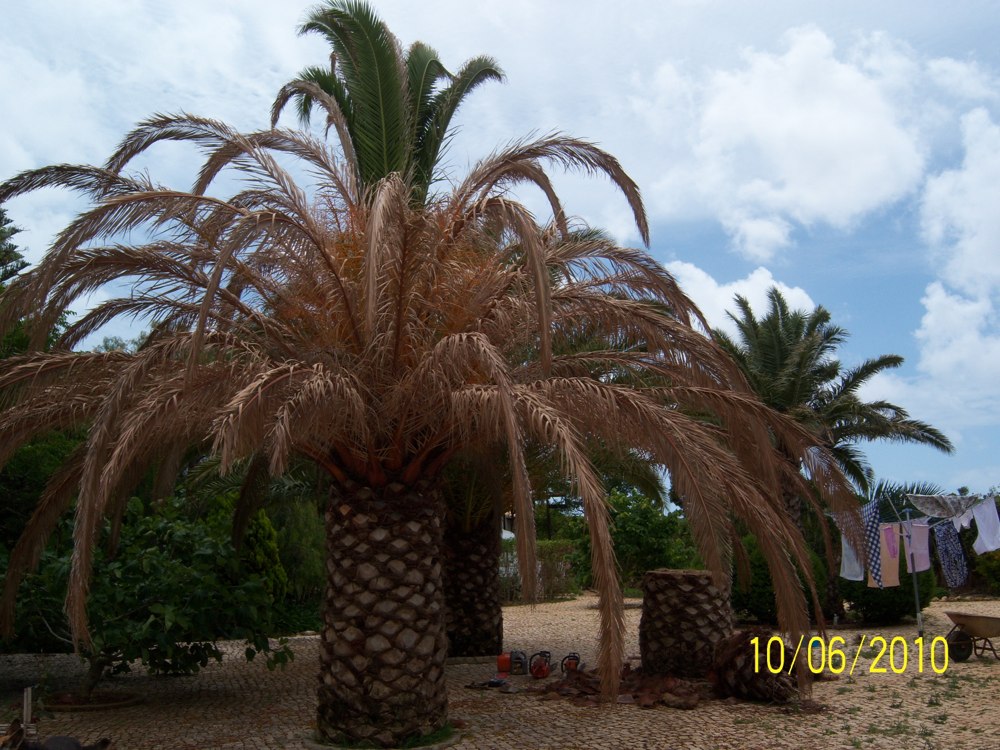
- Sporenlager der Podridão rosa
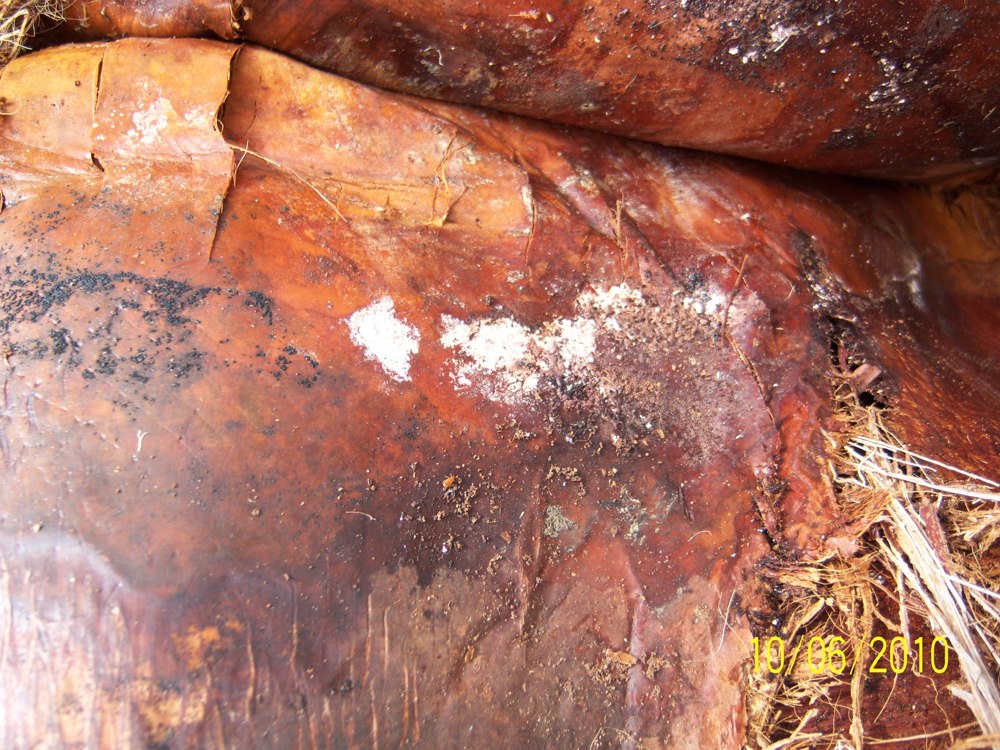
Another common and not less dangerous disease of Algarvian Palm trees is the ‘podridão rosa’. It is not easy to be controlled but untreated leads to death inevitably. Just as the Red Palm Weevil the fungus preferably attacks individuals of the Phoenix species. The symptoms however are exactly opposed: While the larves of the beetle eat the heart of the Palm tree, what makes the inner leaves fall out first, in the case of the podridão rosa the leaves die back ring by ring from the outside inwards. Between the bases of the leaves of the felled palm tree a rose-colored cover can be observed. This filthy lining contains the spores of the fungus. To stop a further distribution dead palm trees should be removed professionally.


Comentários